IAC-SC

Main Menu

  • Home
  • News
  • Blog
  • Events
  • Gallery
    • Visuals
  • About
    • Contact

IAC-SC

  • Home
  • News
    • Iran trying to evict Christians from oldest Protestant church in Tehran — ...

      July 5, 2026
      0
    • Iran more than doubled executions in 2025 as global use of the ...

      July 4, 2026
      0
    • 'Staggering' Iran Toll Drives Up Global Executions: Amnesty

      May 25, 2026
      0
    • Iran’s same-day death sentences show its brutality, again

      May 18, 2026
      0
    • Iran executes two opposition members as judiciary vows 'no leniency'

      April 24, 2026
      0
    • Iran: Seven protesters and dissidents at risk of imminent execution after four ...

      April 13, 2026
      0
    • Gingrich, Ex-Military Leaders Throw Support Behind Iran Opposition Group

      March 29, 2026
      0
    • NCRI Provisional Government Wins Backing Beyond 1,000 International Figures

      March 21, 2026
      0
    • EU designates Iran's Revolutionary Guard a terror group

      February 1, 2026
      0
  • Blog
    • Iran: Lack of international justice six months after January protest massacres risks ...

      July 11, 2026
      0
    • Time for West to Recognize Iran's Democratic Alternative

      July 3, 2026
      0
    • Months after the regime crackdown, Iranians search for missing protesters

      June 7, 2026
      0
    • A weakened Tehran faces its greatest threat: The Iranian people

      May 25, 2026
      0
    • Iran Conducting Near-daily Prisoner Executions in Secrecy, Say Rights Groups

      May 10, 2026
      0
    • The Most Dangerous Kind of War Is One Without Strategy

      April 13, 2026
      0
    • America's Exit Strategy Is Already Inside Iran

      April 9, 2026
      0
    • The women-led resistance the Iranian regime fears most

      February 27, 2026
      0
    • Don’t impose another Persian dictatoron a multinational Iran

      February 17, 2026
      0
  • Events
  • Gallery
    • Visuals
  • About
    • Contact
Blog
Home›Blog›The Iranian regime’s first victims are its own people
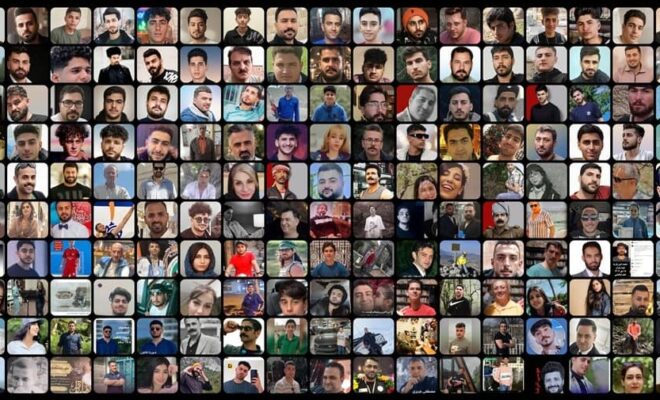
The Iranian regime’s first victims are its own people

By IAC-SC
February 5, 2026
354
0
Share:

  Newsweek|   Jason D. Greenblatt   |   Feb 03 2026      

Any discussion of the Iranian regime—whether diplomatic, strategic, or military—usually begins with its external threats: nuclear enrichment, missile development, regional proxies and the danger these pose to Israel, U.S. Arab allies and global stability. These risks are real, and they could quickly produce widespread damage and large numbers of victims far beyond Iran’s borders.

But before any of that happens, there are already victims. They live inside Iran.

The Iranian people are too often treated as a secondary concern, eclipsed by geopolitical calculations and security debates. That framing misses something fundamental. The regime’s threat to the outside world begins with how it governs at home. The same system that projects coercive power abroad sustains itself through coercion within.

Iran does not conceal its repression. It broadcasts it.

Arrests are public. Executions are announced. Internet access is blocked. Morality police enforce compliance openly and aggressively. The message is unmistakable: Dissent will be seen, punished and remembered.

What matters is not only the visibility of this repression, but its purpose. This is not a government losing control. It is a government exercising it—using fear as a governing tool and human suffering as a stabilizing force.

Protests in Iran trigger a familiar sequence. Security forces sweep the streets. Courts move quickly. Death sentences follow. This is not law enforcement; it is messaging. Punishment is deployed deliberately, turning protesters into warnings for everyone else.

Iran’s arrests, trials and executions are not instruments of justice. They are methods for producing obedience.

The same logic governs Iran’s extensive morality laws. These rules dictate how people dress, where they go, what they say and how they behave online. They are not cultural safeguards. They are mechanisms of control, asserting comprehensive authority over the individual.

That authority is reinforced through internet shutdowns during periods of unrest. Cutting off communication does more than limit outside scrutiny. It isolates people from one another. Without the ability to share information, organize, or even confirm what is happening elsewhere, fear deepens. Each person is left to believe they are alone.

That isolation is deliberate. It blocks solidarity. It erases memory. It prevents resistance from becoming collective.

Over time, these practices reshape everyday life. Participation gives way to compliance. Public punishment replaces public debate. Fear fills the space where civic life should exist.

This form of rule does not depend on constant violence. It depends on the expectation of it. Once fear is internalized, cruelty becomes efficient. The regime no longer needs to punish everyone. It only needs to punish enough.

Iran’s repression is not episodic or reactive. It is structural. The regime does not deviate from its purpose when it terrorizes its population—it fulfills it.

In Iran, silence is safety. The regime enforces this lesson relentlessly. Those who speak are punished; those who withdraw are spared. Survival depends not on participation, but on retreat from public life.

As U.S. officials consider renewed diplomatic engagement with Tehran, it is tempting to narrow the discussion to security concerns alone.

But diplomacy that treats Iran’s internal repression as a secondary issue rests on an incomplete picture of the regime itself. A government that rules by terrorizing its own population cannot be separated from the threats it poses beyond its borders. A regime that treats human beings as instruments at home will approach agreements the same way—transactional, disposable and contingent on convenience.

Too often, international negotiations bracket domestic repression as an internal matter. That choice has consequences. A regime sustained by fear is not stable; it is brittle. Its violence is not incidental to its strategy. It is the strategy.

Any serious approach to Iran must therefore confront the full scope of the threat the regime poses—not only to regional security and global nonproliferation, but to the Iranian people themselves. Their repression is not peripheral to the problem. It is central to it.

Clarity matters because confusion benefits power. Vague language blurs responsibility. What is happening in Iran should be understood plainly: This is a regime that governs by breaking its own people.

Iran’s regime has not merely failed its population. It has destroyed the conditions that make ordinary civic life possible.
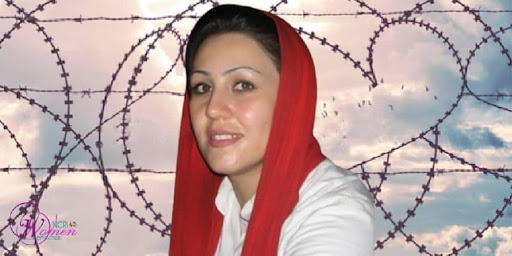

The Iranian regime has ruled for decades by repressing its own people. Any effort to engage it that ignores this reality risks failing the Iranian people—and destabilizing the region beyond them.
https://www.msn.com/en-us/news/world/the-iranian-regime-s-first-victims-are-its-own-people-opinion/ar-AA1VyTXh?ocid=hpmsn&cvid=2284894cd0c54818bac2251ed5308f2f&ei=143
TagsFREE IRANIran Human Rights
Previous Article

EU designates Iran’s Revolutionary Guard a terror ...

Next Article

Don’t impose another Persian dictatoron a multinational ...

0
Shares
  • 0
  • +
  • 0
  • 0
  • 0
  • 0

Related articles More from author

  • News

    A Pawn in a Cruel Political Game’

    June 5, 2022
    By IAC-SC
  • News

    Canada says it is listing Iran’s IRGC as a terrorist group

    June 22, 2024
    By IAC-SC
  • News

    October 19, 2022
    By IAC-SC
  • News

    An ‘emerging secular, democratic consensus’ stares Iranian theocracy in the face

    November 23, 2022
    By IAC-SC
  • Blog

    Neither Shah Nor Supreme Leader: Can Iran’s Theocracy Survive a Nation in Revolt?

    January 24, 2026
    By IAC-SC
  • News

    Iran’s Revolution and its Characteristics

    September 29, 2022
    By IAC-SC

You may interested

  • News

    Iran more than doubled executions in 2025 as global use of the death penalty hit 44-year high, report says

  • News

    Iran’s Revolution Will Bring About a Secular Democracy

  • News

    Iran: Alarmingly high number of executions in short period of time

Latest Tweets

Tweets by @OrgIAC
  • LATEST REVIEWS

  • TOP REVIEWS

Timeline

  • July 11, 2026

    Iran: Lack of international justice six months after January protest massacres risks further atrocity crimes

  • July 5, 2026

    Iran trying to evict Christians from oldest Protestant church in Tehran — as Islamist regime cracks down

  • July 4, 2026

    Iran more than doubled executions in 2025 as global use of the death penalty hit 44-year high, report says

  • July 3, 2026

    Time for West to Recognize Iran’s Democratic Alternative

  • June 7, 2026

    Months after the regime crackdown, Iranians search for missing protesters

Latest Comments

Find us on Facebook

REP. JOE WILSON (R-SC)

Rep. William Timmons (R-SC)

https://youtu.be/PVE-wDlzkuA

REP. RALPH NORMAN (R-SC)

About us

logo

Iranian American Community of South Carolina (IAC-SC) is an all-volunteer, non-profit, serving the Iranian Americans. We are inspired by Iranian people's desire for a democratic, secular, non-nuclear republic Iran that embraces a peaceful and prosperous Middle East.

Rep. Nancy Mace (R-SC) at IWCC

https://youtu.be/uEE-0eR34H0

Rep. Nancy Mace (R-SC)

https://youtu.be/G41XTzi_zKE
  • Contact
  • About Us
  • Home